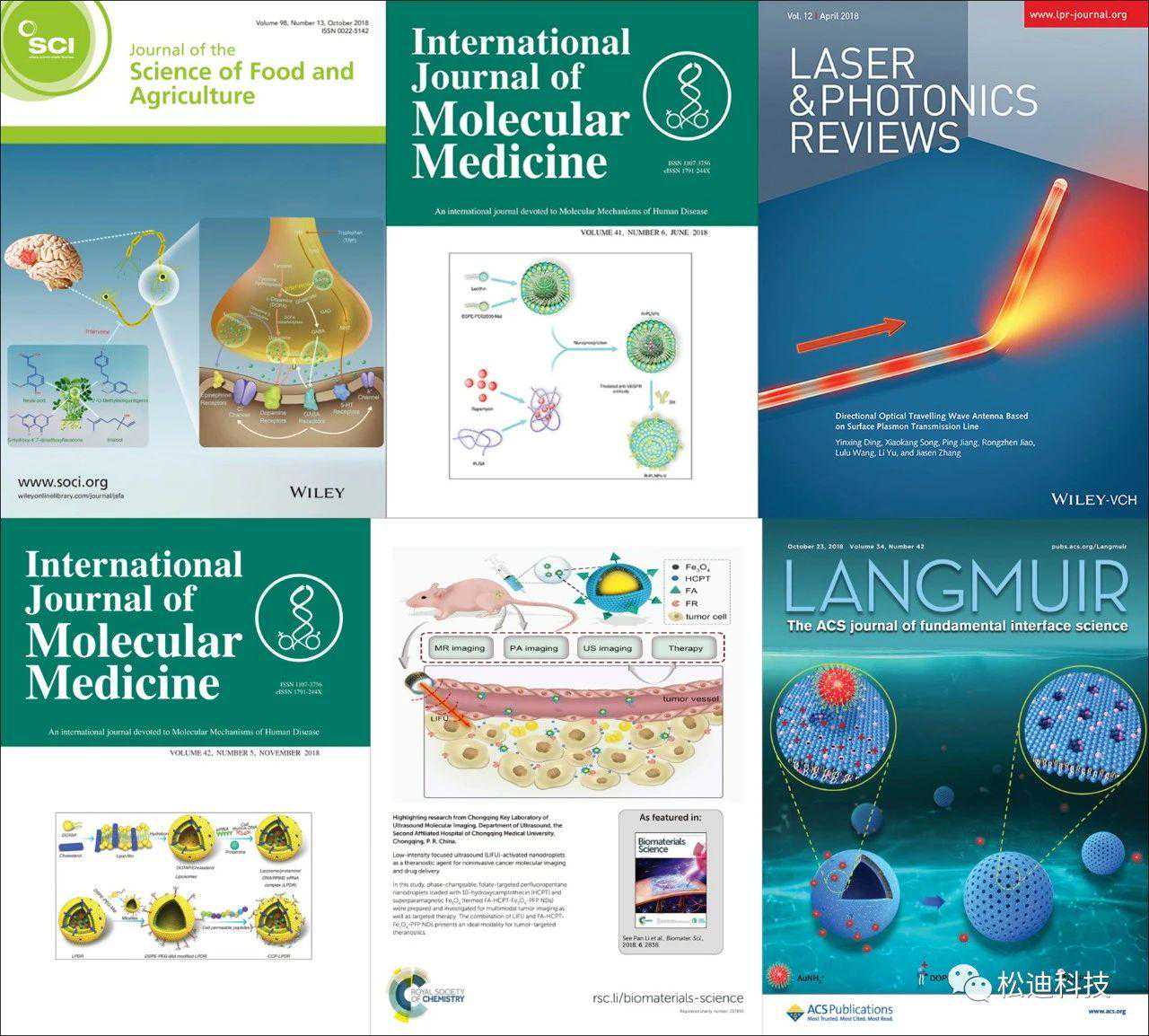
搞科研,论文写得好很重要
如果一张漂亮的图片
就能对论文产生意想不到的助益~
配图/TOC画得好
竟然能够登上封面!
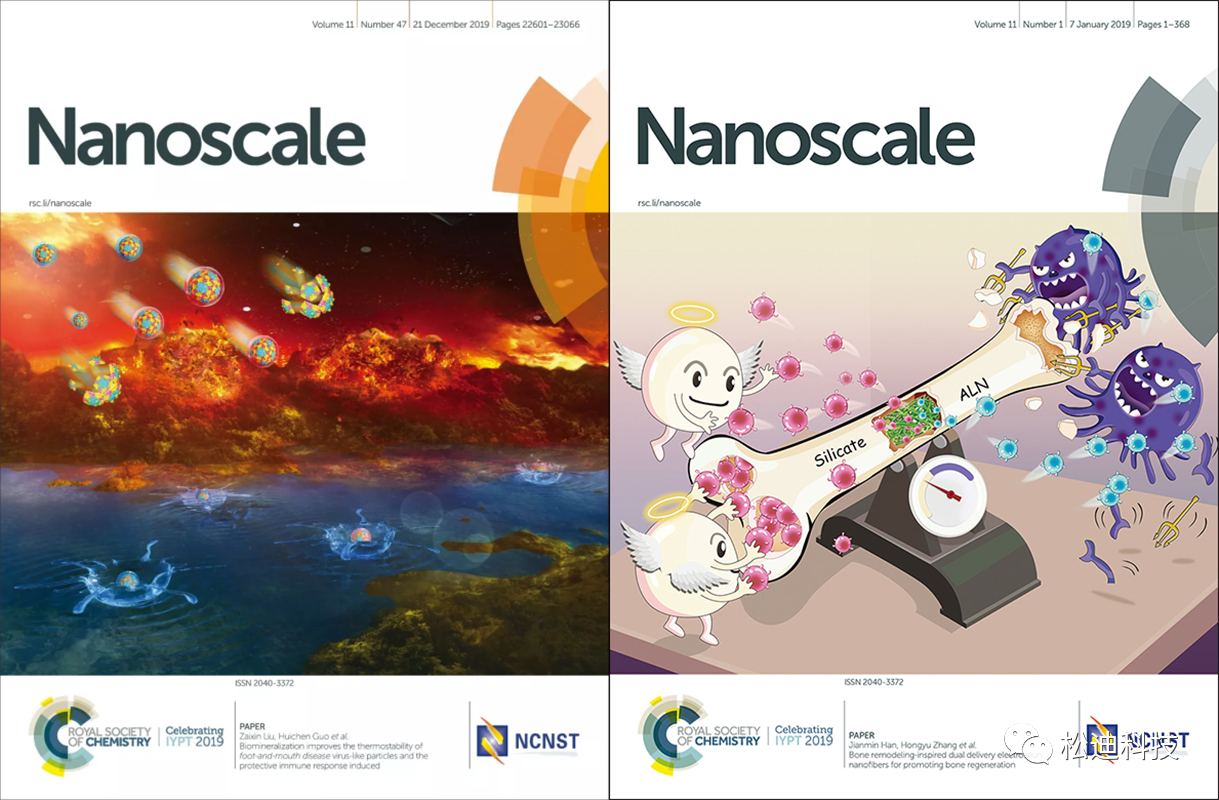
同样的,背封画得漂亮
也能变成正封哦!
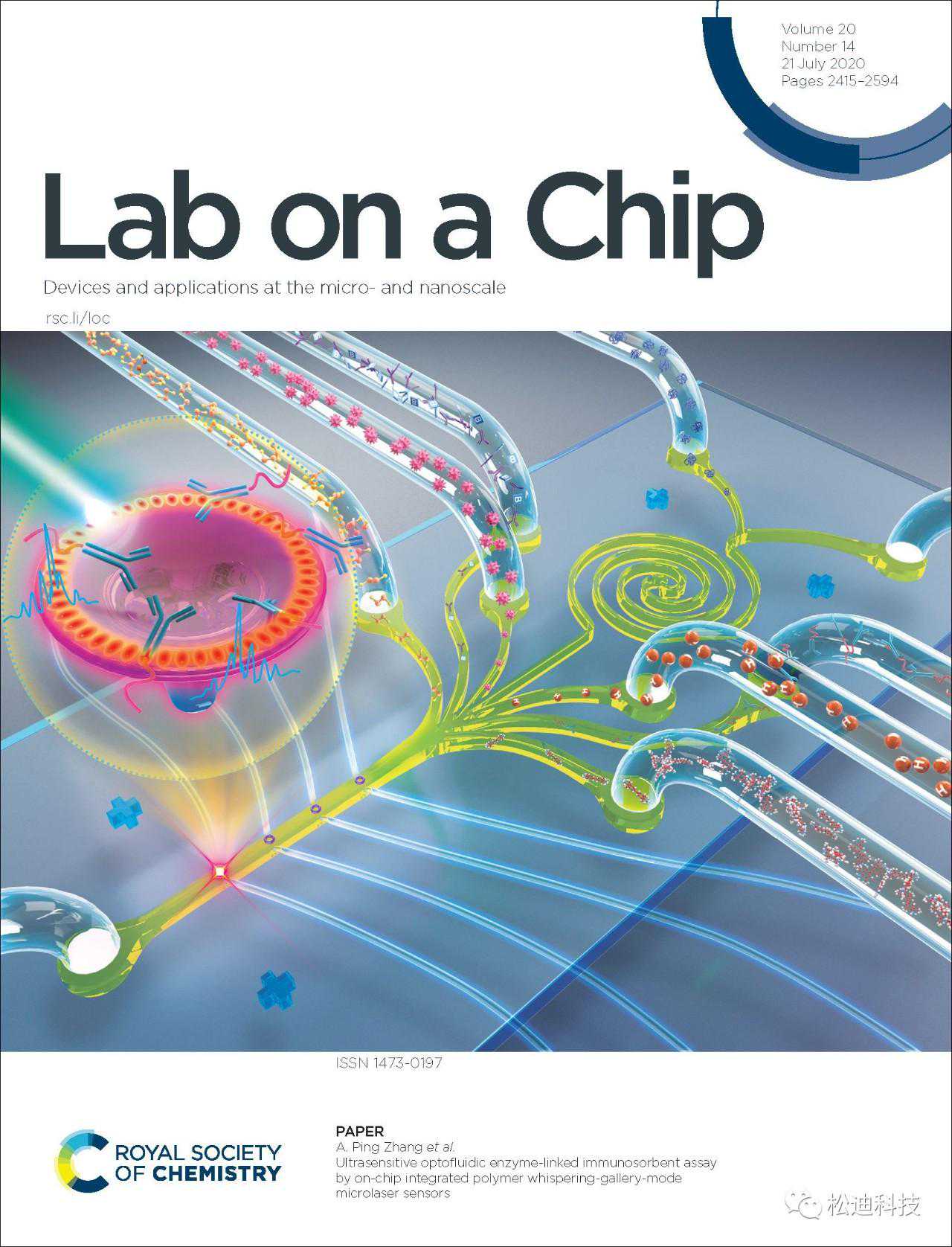
7月,松迪又有一张背封作品得到了编辑的喜爱
成功转为了正封~!
一起来赏析下这张给编辑带来惊喜的封面吧:
Title:CylindricalLine-FeedingGrowthofFree-StandingSiliconNanohelicesasElasticSpringsandResonators
2020年7月份,香港理工大学张阿平教授在期刊LabChip.上发表文章。
此次松迪设计的图像被选为期刊封面,让我们走进今天的封面故事。
摘要:
Opticalwhispering-gallery-mode(WGM)microcavitiesoffergreatpromiseinultrasensitivebiosensorsbecauseoftheiruniqueabilitytoenableresonantrecirculationoflighttoachievestronglight–,itremainsachallengetodevelopcost-effective,high-performanceWGMmicrocavity-,wepresentanoptofluidicchipthatisintegratedwithdirectly-printed,high-quality-factor(Q)polymerWGMmicrolasersensorsforultrasensitiveenzyme-linkedimmunosorbentassay(ELISA).Optical3Dμ-printingtechnologybasedonmasklessultravioletlithographyis,low-thresholdWGMmicrolasersarefabricatedandthenintegratedtogetherwit,on-chip,integrated,WGMmicrolasersarefurthermodifiedinsishperoxidase(HRP)–streptavidin,whichisawidelyusedcatalyticmoleculeinELISA,−1.Moreover,itenableson-chipoptofluidicELISAofthediseasebiomarkervascularothelialgrowthfactor(VEGF)−1,whichisover2ordersofmagnitudebetterthantheabilityofcurrentcommercialELISAkits.

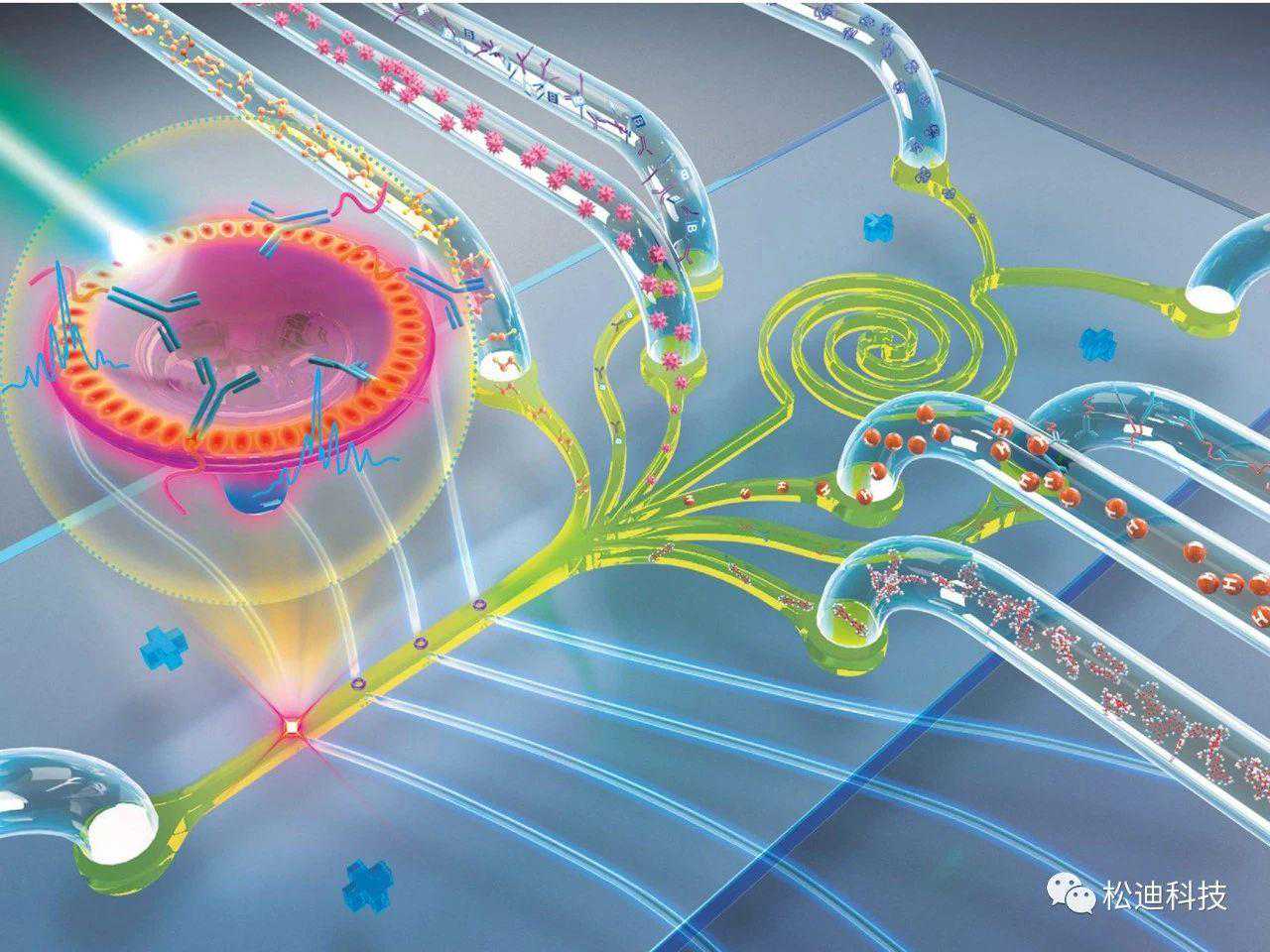
在本次封面中主要突出了研究的两个重点:
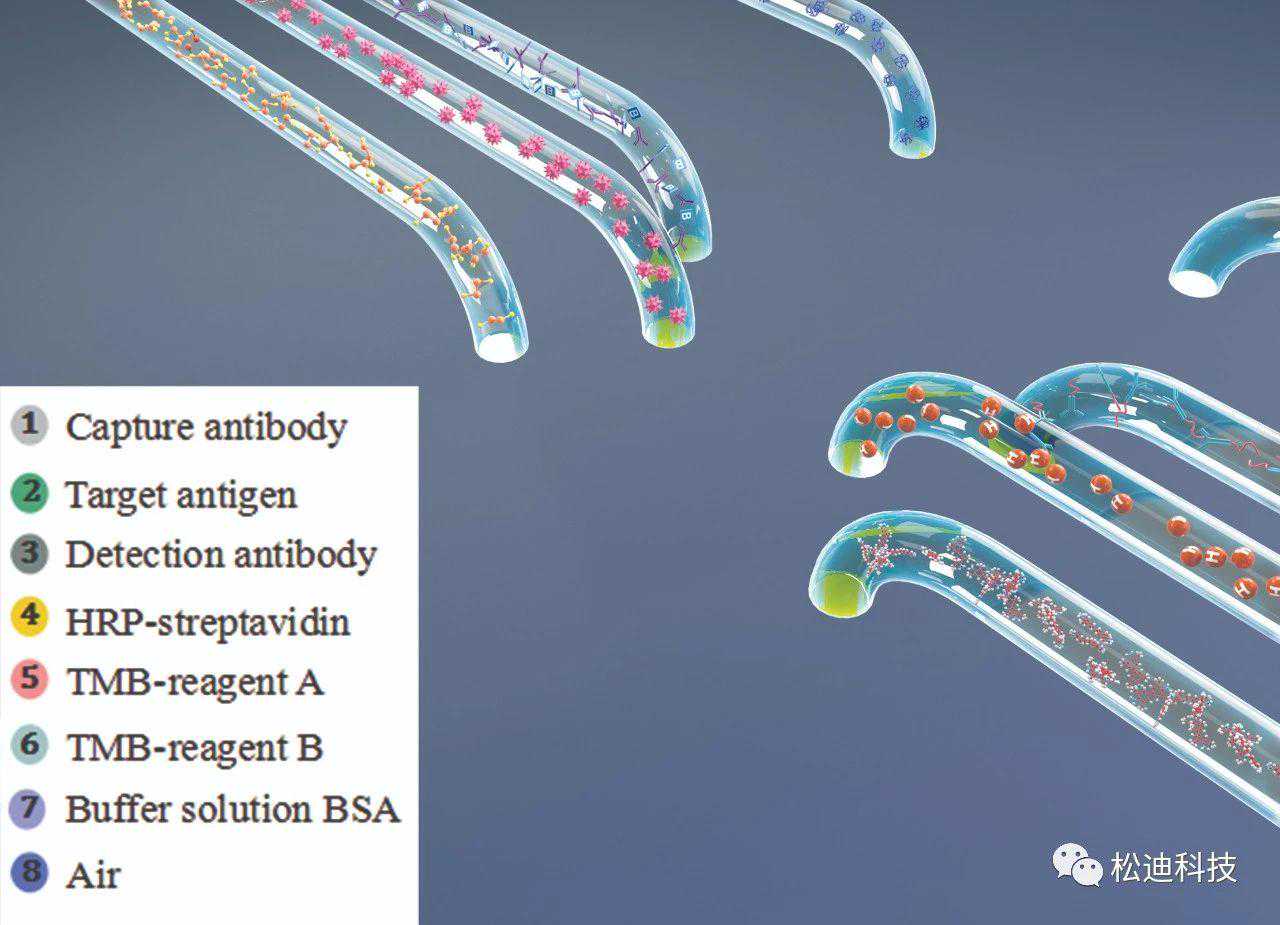
①微流控芯片的微流通道及里面的生物标记物;
②光学微腔。
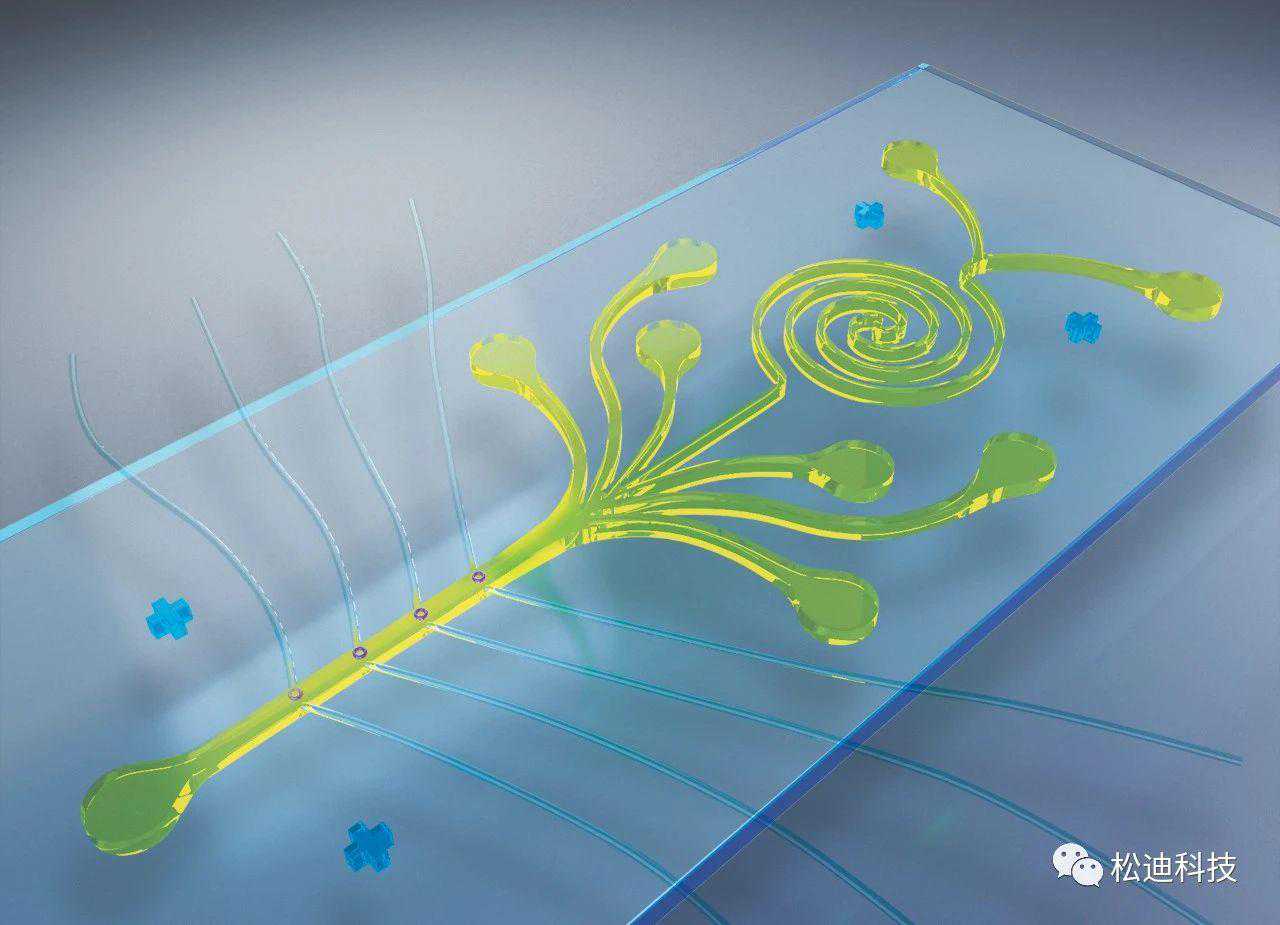
我们首先来微流控芯片,底下的蓝色片状结构就是生物芯片,而荧光绿结构则是芯片的通道。
管子里面是生物抗体和一些标记物,封面表现出了各种各样的抗体抗原进入芯片的过程。
最后在画面右侧的球状结构,表现出了激光在谐振腔周围,并且上面还有抗体修饰。
画面配色清新自然,芯片和管子结构立体直观,整体非常舒适。
背封转为正封,是对松迪实力与专业的认可,同时更是一种激励;我们也将继续秉承“助力科研,服务科研”的理念,不断为大家带来更具创意、更加美观的科研图像作品❤